
Walls that look fine in the evening can look very different at noon. Before you plan anything, look at your walls and ceilings the way daylight does.
Look in daylight, from the side
Stand next to a window and look along the wall. Side light shows old texture, patches, seams, and waves that are almost invisible under lamps in the evening. Do the same with the ceiling. What you see in that light is what you will see every day after new paint.
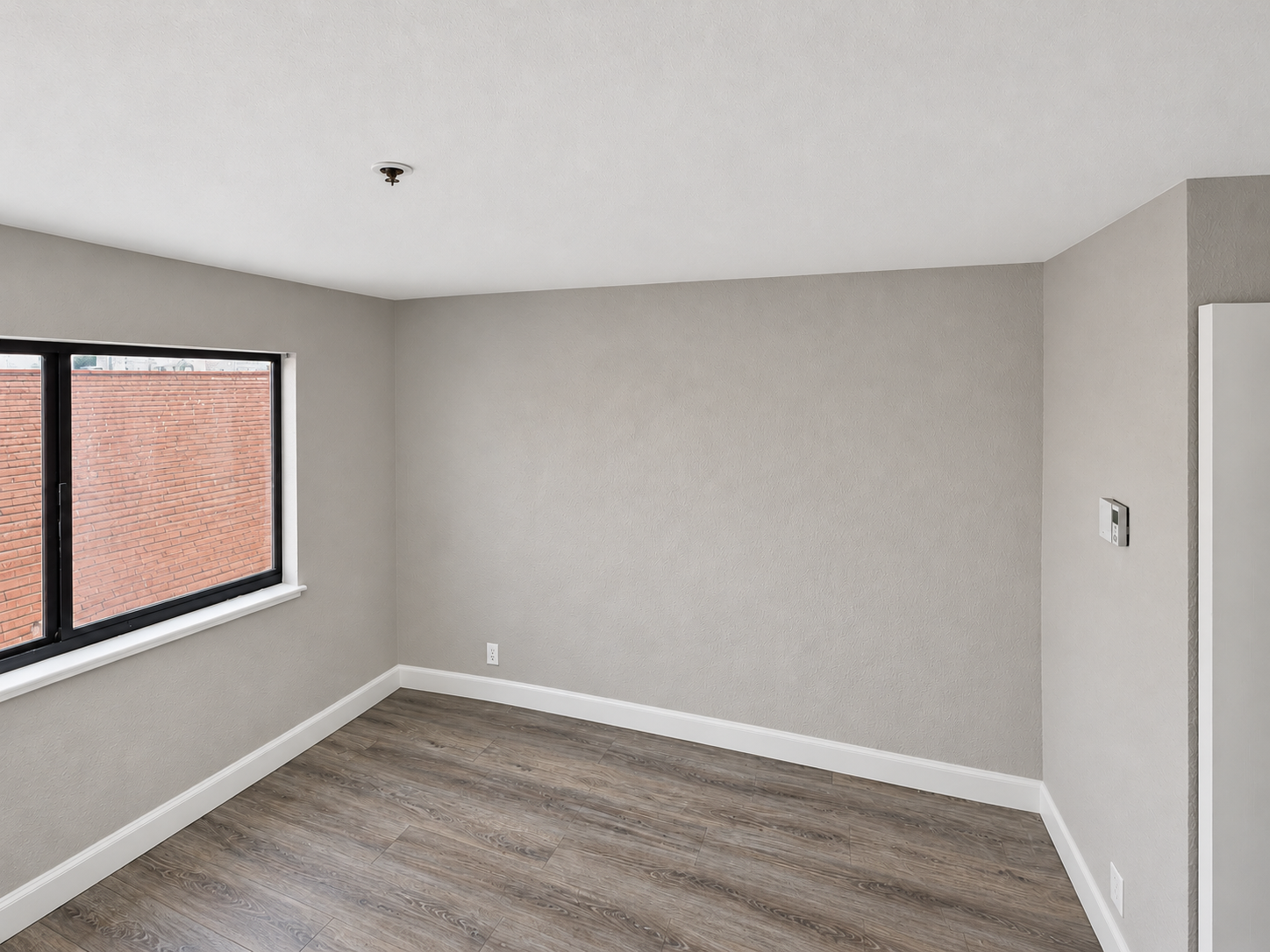
Our project in Oakland. Daylight from a large window falls along the wall. This is the light that shows every wave and patch.
Decide what result you want
A smoother texture, a fully smooth wall, and a Level 5 finish are three different scopes of work. If a designer or architect specifically calls for Level 5, say so before the work is priced. We explain the difference here: Skim Coating vs. Level 5 vs. Texture Removal.
Decide about the ceiling at the same time
Walls and ceilings can be skim coated together or separately. Decide together. A smooth wall next to a textured ceiling makes the ceiling texture more noticeable, and doing the ceiling later means protecting and cleaning the room twice. One note: we do not remove popcorn ceilings.
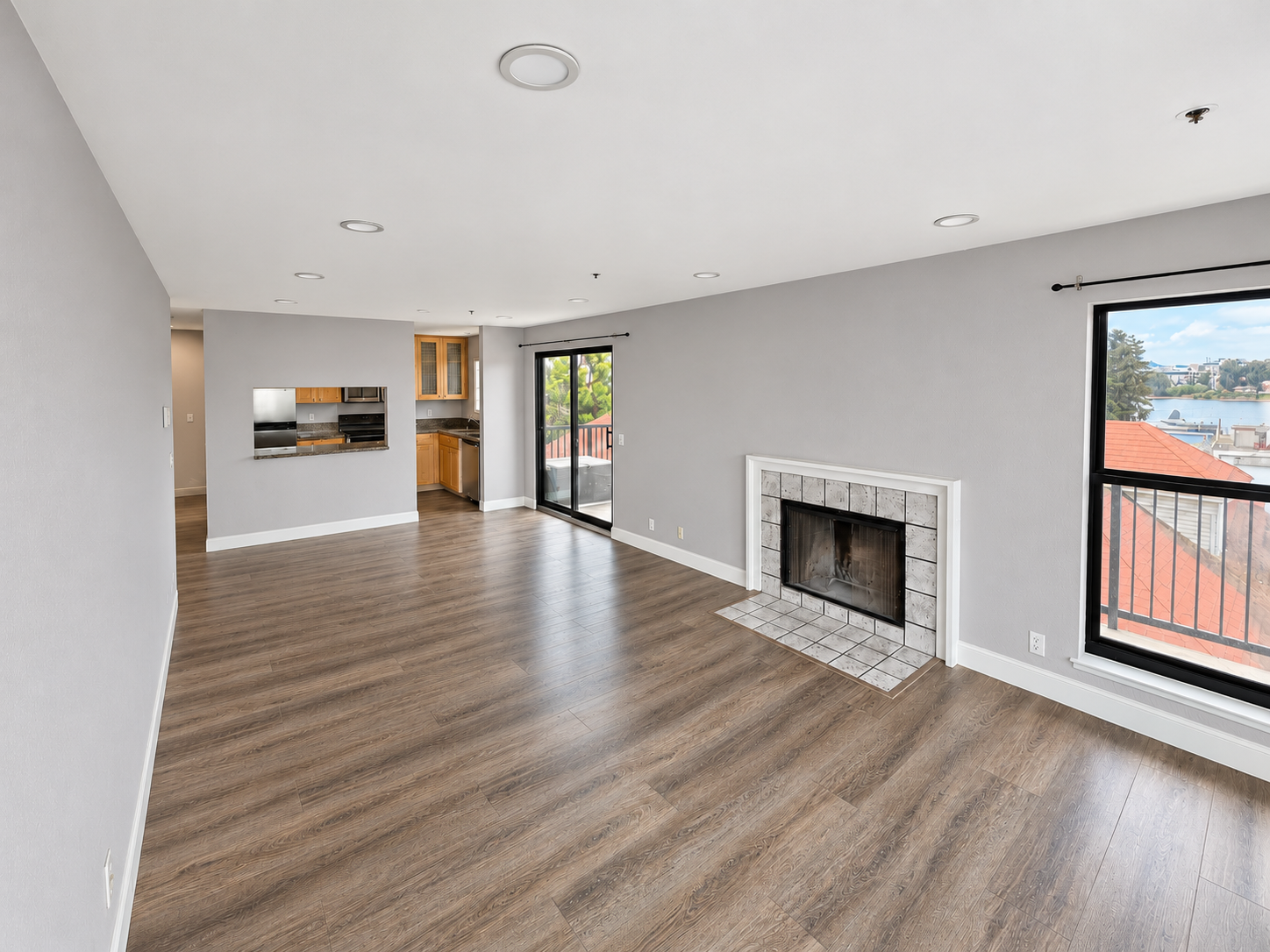
Smooth walls and a smooth ceiling in a living room in Oakland.
Put the work in the right order
- New recessed lights, outlets, or switches come first. Every new opening is a patch in the wall or ceiling.
- Skim coating and primer come next.
- Finish paint and new floors come after.
If a kitchen or bathroom remodel is planned, that is the practical moment for the walls, because the room is already open and protected.
Older homes: test before sanding
Homes built before 1978 may have lead-based paint, so work that disturbs painted surfaces is handled under the EPA lead-safe rules (RRP). Older sprayed or troweled texture may also contain asbestos and may need to be evaluated before it is disturbed. QualiBuild does not do asbestos testing or abatement. When testing or specialized work is required, qualified professionals handle it before our work continues.
Think about paint before the walls are smooth
Smooth walls are less forgiving than textured walls. Dark paint and semi-gloss show everything. In rooms with large windows we recommend matte or eggshell paint. Primer is included in our skim-coating work, so the surfaces are handed over ready for finish paint.
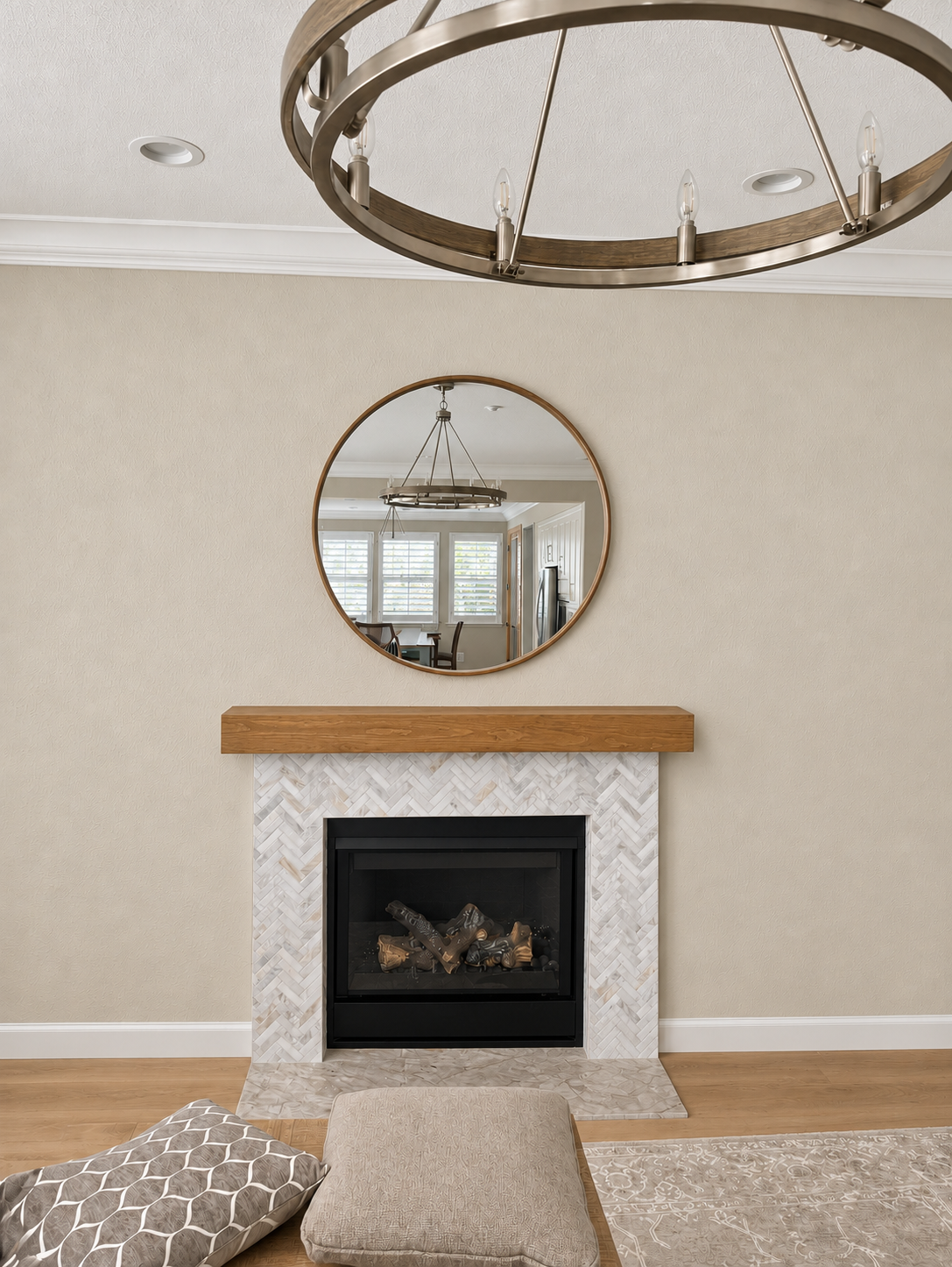
A smooth wall and ceiling above a fireplace. A large plain wall like this is where paint sheen matters most.
Plan for dust
We isolate the work area, sand with a HEPA vacuum, and clean up daily. Drywall sanding is never completely dust-free, so the goal is to keep the dust contained within the work area. Decide in advance which rooms can be emptied and when.
What to decide now and what can wait
Decide before the work is priced:
- Which rooms, and whether ceilings are included
- The result you want: smoother, fully smooth, or Level 5
- Any new lights, outlets, or switches
- Testing, if the home is older
Can usually wait:
- Paint color, as long as the sheen is decided
Planning smooth walls and ceilings?
Send us photos, a short video, and rough dimensions of your walls and ceilings. See how we work on our Smooth Walls & Ceilings page, or request a consultation.
By Mikhail Strelkin, QualiBuild